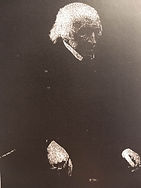
The Rice Family
In 1770 Richard and Charles Frizzell Jnr were commissioned to draw a map of the 3,961
acres of the Mount Trenchard estate, listing the main tenants. This was to facilitate the
dividing of the estate between two purchasers who were buying it from the two daughters
who had inherited. One of hte new owners was Richard Rice a Kerry gentleman who acquired
a portion in 1767, the other the Earl of Conyngham who purchased his part in 1773. By 1804, he had sold this to Thomas Rice for £26,000 ( see photo Thomas Spring Rice , 1st Baron Monteagle). Rice further established himself in the area by marrying the sister of the Knight of Kerry. The 1770 map reveals that the house at Cappagh was relatively isolated. The coastal area was marshy, while the higher land behind the house was boggy. The nearest house was about two miles away at Leahys. With no village at Foynes, Shanagolden was the centre of life in the area with tanyards, a church, a cluster of houses and in its vicinity, a number of seats as big houses were referred to in the eighteenth century. Good arable and pasture land was found between the marshes and bogs; at Cappagh itself there was 291 acres of arable, 29 acres of pasture and a substantial wood to the west of the house.
Thomas Rice's son, Stephen Edward, made his contribution to the estate by marrying an heiress. Catherine Spring of Castlemaine, Co. Kerry received £50,000 from her mother on her marriage to Stephen Spring on 10 August 1785. Five years later she gave birth to their first son in what was probably their townhouse at 2 Mungret Street in Limerick (now demolished). Catherine's contribution to the Rice presence in counties Limerick and Kerry was expressed in the family name of Sprin Rice, which their children were given and with which they were expected to achieve great things.
Thomas Spring Rice
Thomas Spring Rice was given the education designed to train men for public office in Britain; a first degree at Cambridge and training as a barrister. Although distant ancestors on his mother's side had entered politics - Sir Stephen Rice had been Baron of the Exchequer in 1687 and Edward Rice had represented Askeaton in Parliament in 1689 - he was the first of Mount Trenchard Rices to consider a career beyond the estate. In 1811 he reached his majority, inherited the Mount Trenchard estate and married Lady Theodosia Pery, the second daughter of the first Early of Limerick. It soon became apparent that not only had Thomas's education not been wasted but that he had the kind of ambition that would allow him to realise any hopes his parents may have harboured. More surprising, and possibly less acceptable to them was his early awareness that the established system in Ireland was corrupt, that this was obstructing progress at a time of economic expansion, and that the poor were also further disadvantaged. In 1815 he criticised landlord abuse of power in hte Grand Jury system, and four years later he turned his attention to reports that the inmates of the Limerick Lunatic Asylum were being mistreated. In the same year he prosecuted John Scanlon for the murder of a Foynes girl and his wife Eily O'Connor, a case which captured the public imagination and inspired Gerald Griffin to write "The Collegians", Dion Boucicault " The Colleen Bawn".
His liberalism was not misdirected for in Limerick he found a group of wealthy and politically frustrated merchants who welcomed this talented, idealistic and ambitious young man as their champion. Busy making fortunes processing and trading in agricultural produce from the Limerick hinterland, the merchants were repeatedly prevented from obtaining positions in a corporation which was dominated by Lord Gort. Further, those who accepted Gort's patronage often proved to be corrupt, awarding themselves, among other things, 999 -year leases for minimal outlay. Many of the Independent merchants, as they called themselves, had bought leases in the New Town being laid out on Edmond Sexton Pery's land outside corporation jurisdiction. They had formed themselves into a chamber of commerce in 1815. They had also contested incidents of corporation corruption, and local elections, though without success. However, they were conscious of having a popular followin; after being unsuccessful in local elections against established corporation figures both Lord Glentworth in 1812 and later Mr Tuthill were carried through crowds estimated at 30- 50,000 on elaborately decorated chairs and platforms. The Independents encouraged Spring Rice to take a prominent part in their meetings and when a general election was called in 1820, he was selected as their representative.